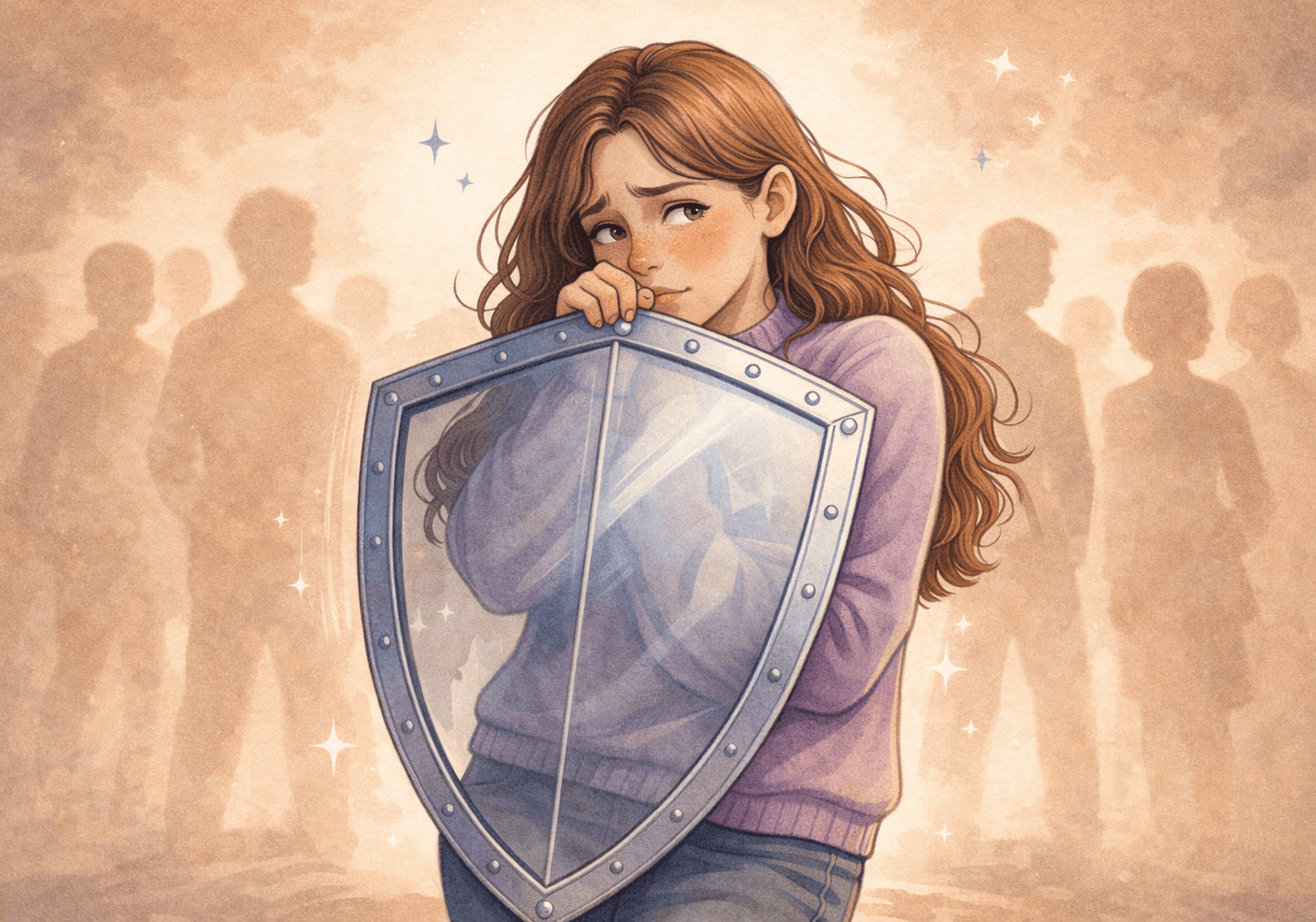
There are many levels of shyness, but at their core they all serve the same purpose: limiting our exposure. Shyness is a shield—a form of protection against what we are afraid of. That fear might be making a fool of yourself in front of a crush, walking into unfamiliar social situations, or interacting with people you don’t yet understand. Sometimes it’s not one specific fear at all, but the world itself that feels overwhelming. To stay safe, we hide. We make ourselves smaller. We limit how much we speak, how much we engage, and how visible we allow ourselves to be, all in an effort to reduce the chance of getting hurt.
Over time, this protective behavior becomes internalized. The thing that holds us back from perceived danger is no longer the outside world—it is us. We begin creating rules for ourselves about what we should and shouldn’t do. We tell ourselves stories about why it’s better not to speak up, not to approach someone, or not to try at all. Our bodies respond accordingly. Emotions intensify, our heartbeat quickens, and the nervous system activates its fight-or-flight response, preparing us to escape, withdraw, or disappear. When this happens often enough, it stops being a conscious choice. It becomes automatic—a gut-level reaction that kicks in before we even have time to think.
At this point, many shy people assume this is simply who they are and always will be. They believe shyness is something to endure or overcome. What they don’t yet realize is that this same protective system has been quietly developing skills beneath the surface. Shyness doesn’t just keep you safe; it trains you. It sharpens your awareness, heightens your sensitivity, and teaches you how to read situations quickly. These traits don’t disappear—they wait. And when you learn how to use them, they can become powerful.
The first step is learning to notice your reactions. There is always a moment—however brief—between what happens and how we respond to it. You can see this clearly in young children. When a child is hurt, there is often a short pause before the emotion fully arrives. You can watch them process what just happened, their face shifting as they decide how to respond, before the crying begins. As adults, we do the same thing, though the process happens faster and more quietly. Fear, anger, or withdrawal rises almost instantly, and we act without realizing we’ve made a choice.
With awareness and practice, that moment becomes visible again. If you are shy, observation is already one of your strengths. You developed it to stay protected. That same skill allows you to notice the pause—the space between stimulus and response. When you catch that moment, you gain access to something crucial: choice. Instead of reacting automatically, you can ask yourself what is actually happening and what the situation is telling you. Is this a real danger, or a familiar fear? What information is your body giving you, and how do you want to use it?
This moment of decision is where shyness transforms. Your gut reaction was not wrong; it was trying to warn you. The shift comes when you stop letting fear decide your next move and begin choosing your response intentionally. Observation turns into insight. Instinct becomes information. What once pushed you to hide can now guide you toward thoughtful action—whether that means speaking up, setting a boundary, or helping others understand what you’ve noticed.
This is where shy superpowers live. Not in eliminating fear, but in learning how to work with it. Shyness does not disappear when you grow—it evolves. And when you learn to listen to it rather than fight it, it stops holding you back and starts showing you how to move forward.