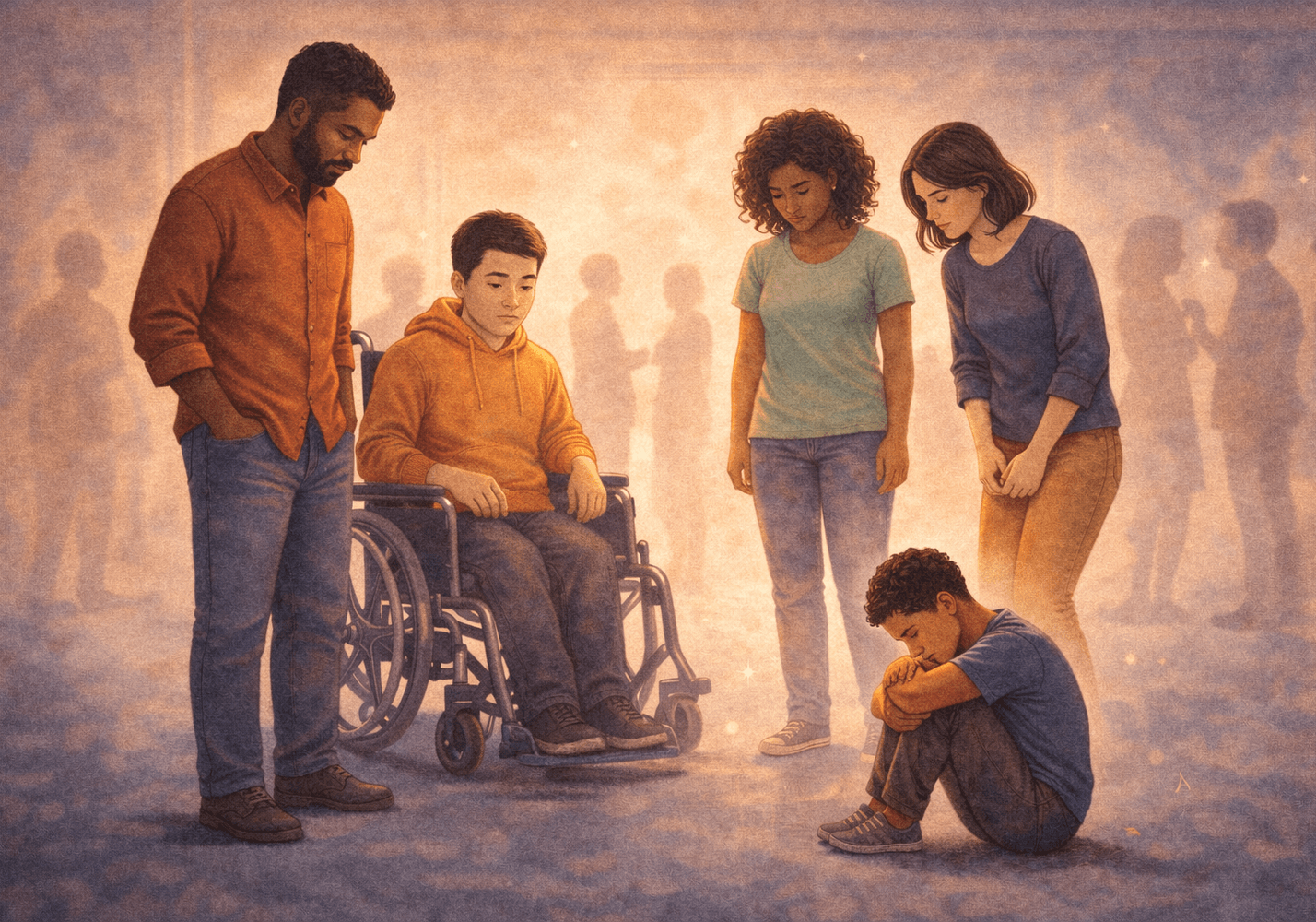
There comes a moment when what once felt permanent begins to crack.
For many shy people, the hardest part isn’t fear itself—it’s the story built around it. Stories about who we are, what we’re capable of, and what’s possible for us. These stories don’t arrive fully formed. They grow slowly, shaped by small moments that felt big at the time: being laughed at, ignored, misunderstood, or overlooked. Each experience adds another line to the narrative, until the story feels settled, unquestionable, and true.
Over time, these stories stop feeling like interpretations and start feeling like facts.
We tell ourselves we’re “not good with people,” that we “don’t belong in groups,” or that we’re “better off staying quiet.” We don’t remember choosing these beliefs. They simply feel accurate, as though they describe something fixed about us. The danger isn’t that the stories exist—it’s that we forget they are stories at all.
Disillusionment, in this sense, isn’t a loss. It’s an awakening.
To be disillusioned by your own story doesn’t mean discovering you were wrong about everything. It means realizing that what felt solid was built from assumptions, not certainties. The rules you’ve been living by were shaped in moments of protection, not prophecy. They made sense once. They may no longer.
This realization can be deeply unsettling. If the story you’ve relied on begins to loosen, it can feel like the ground shifting beneath your feet. Who are you, if not the version you’ve been narrating for years? What happens if the limits you accepted were never as firm as they seemed?
Yet this is also where possibility returns.
When a story loses its grip, space opens up. You begin to notice moments that don’t fit the old narrative—times when you spoke up and were heard, when connection felt natural, when courage showed up quietly but unmistakably. At first, these moments feel like exceptions. But given time, they start to suggest something more: that the story itself may be incomplete.
Shyness thrives on certainty, even when that certainty is limiting. The familiar story, however restrictive, feels safer than the unknown. Disillusionment disrupts that comfort. It asks you to tolerate ambiguity, to live without a script for a while, and to let new evidence in without immediately explaining it away.
This isn’t about replacing one story with a more positive one overnight. It’s about loosening your grip on the old narrative enough to allow change. To question gently instead of conclude quickly. To notice when your experience contradicts your expectations—and to stay with that discomfort long enough for something new to form.
You don’t need to erase your past to rewrite your story. You only need to recognize that it was written in pencil, not stone.
And when you finally see that the story shaping your choices was never the whole truth, disillusionment stops feeling like loss.
It starts to feel like freedom.