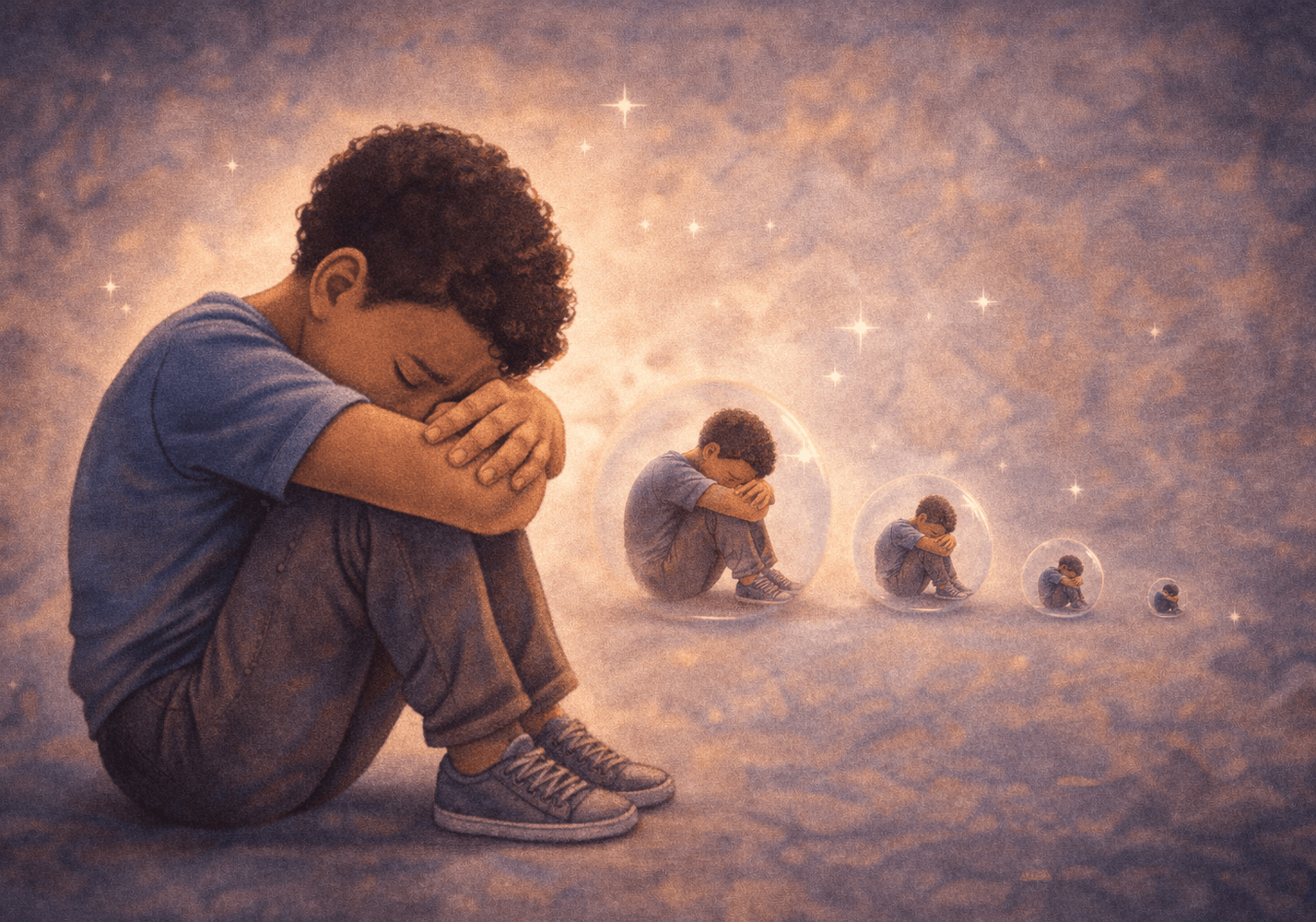
Staying small is rarely a conscious decision. It’s a gradual adjustment, made one moment at a time, in response to what feels safest. When shyness enters the picture, shrinking back often feels like the most reasonable choice. It protects us from embarrassment, from rejection, from the possibility of being seen and judged before we feel ready.
At first, the cost seems low.
You speak a little less. You wait to be invited. You let opportunities pass because they don’t feel meant for you. None of these choices feel dramatic. In fact, they often feel responsible. Staying small keeps things predictable. It reduces risk. It helps you avoid the sharp edges of social and emotional exposure.
But over time, the cost begins to add up.
Each moment of self-restraint leaves a small imprint. Each opportunity declined quietly reinforces the idea that it was never really yours to begin with. The world doesn’t push back against this belief; it simply adapts. Others fill the space you leave open. Decisions get made without you. Paths form that don’t include your voice—not because it lacks value, but because it was never offered.
What makes staying small so difficult to recognize is that it doesn’t feel like failure. It feels like caution. Like patience. Like knowing your limits. Yet beneath that surface, something subtler is happening. Growth requires friction. Connection requires exposure. Self-trust requires evidence—and evidence only forms when you allow yourself to take up space, however tentatively.
When you stay small for too long, you stop collecting that evidence.
You begin to doubt not just your confidence, but your instincts. You second-guess your reactions, your timing, your worth. The protective shield that once kept you safe starts to distance you from your own experience. You may find yourself watching life happen rather than participating in it, unsure of when—or whether—it’s your turn to step in.
This is not a failure of courage. It’s a consequence of adaptation.
Shyness taught you how to survive by minimizing risk. But survival and growth are not the same thing. What keeps you safe in one season can quietly limit you in the next. The shield doesn’t disappear on its own; it waits for you to notice that you’ve outgrown it.
Recognizing the cost of staying small isn’t an invitation to become louder or bolder overnight. It’s an invitation to become more honest about what you’re missing. To acknowledge the connections not made, the skills underused, the parts of yourself that haven’t been tested—not because they were unworthy, but because they were protected.
There comes a point when staying small costs more than stepping forward ever could.
And when you reach that point, growth doesn’t begin with a leap. It begins with a shift—a willingness to take up just a little more space than feels comfortable. To speak once when you would have stayed silent. To stay present instead of retreating. To trust that the self you’ve been protecting is also capable of expanding.
Shyness may have taught you how to stay safe. But it doesn’t get to decide how small your life becomes.